

Learn how to make a simple and delicious caramel sauce made with only sugar, milk, and sea salt. No cream or butter needed!
Quick Note: This is an updated version of a post that originally appeared on Bright-Eyed Baker in 2012. Updates include new text and photos, as well as some details added to the instructions for clarity.

Jump to:
Back in the day, when consuming copious amounts of sugar at once didn't seem like an awful idea, my coffee drink of choice was a caramel frappucino. I later moved to a skinny caramel frap, and then to caramel macchiatos, but my love of all things coffee + caramel persisted. It's for that reason and that reason only that I developed this recipe for making caramel sauce with milk.
I tried multiple other recipes - some using a dry method, some a wet method; some with heavy cream, and some with butter. But here's the thing: they were all problematic for one reason or another. One burned. Another was so thick you definitely couldn't pour it into a latté. And every recipe using cream or butter along with the requisite sugar just seemed a little too heavy for an every-morning drink.
So here we are now, after *many* failed batches, with a very simple caramel sauce made without any cream or butter. Making caramel sauce with milk is extremely unconventional, and there's a reason for that: milk has a lot less fat than heavy cream, which makes the process trickier. But it can work, it's still delicious, and after a little practice it's really not difficult at all.
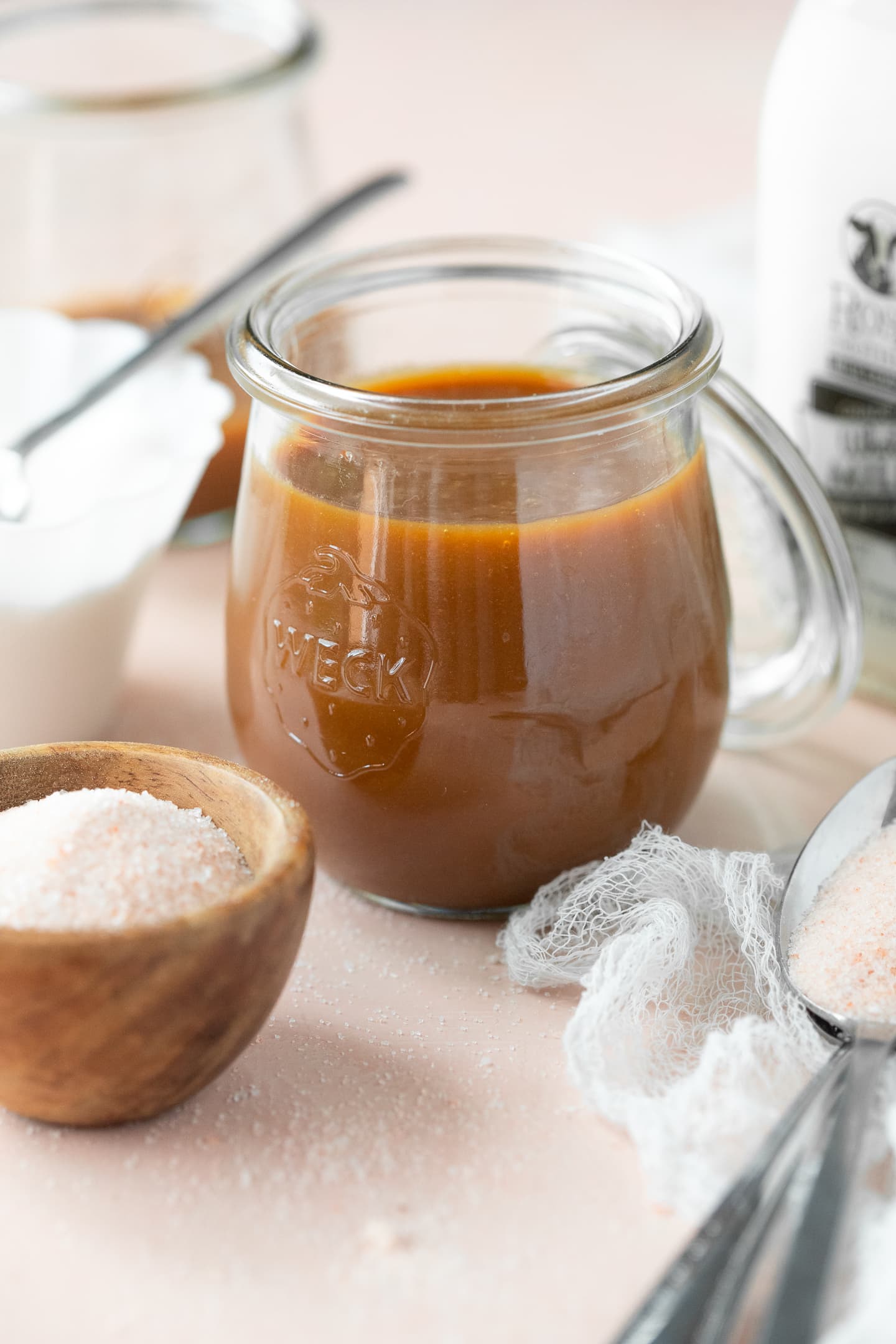
What is dry-method caramel?
Like I mentioned before, there are two basic methods for making caramel: a wet method and a dry method. The wet method involves mixing sugar with water before cooking it; as the sugar melts, the water evaporates. With the dry method, the sugar is heated by itself until it starts to caramelize and turn liquid. Some people find the dry method more difficult, but I personally prefer it.
Ingredients
There are only three simple ingredients you need for this recipe: sugar, milk, and sea salt. I've personally tested this recipe with 2% and whole milk, but readers have shared in the comments that they've used all sorts of other milk. See the recipe notes for other types of milk that I've been told work.
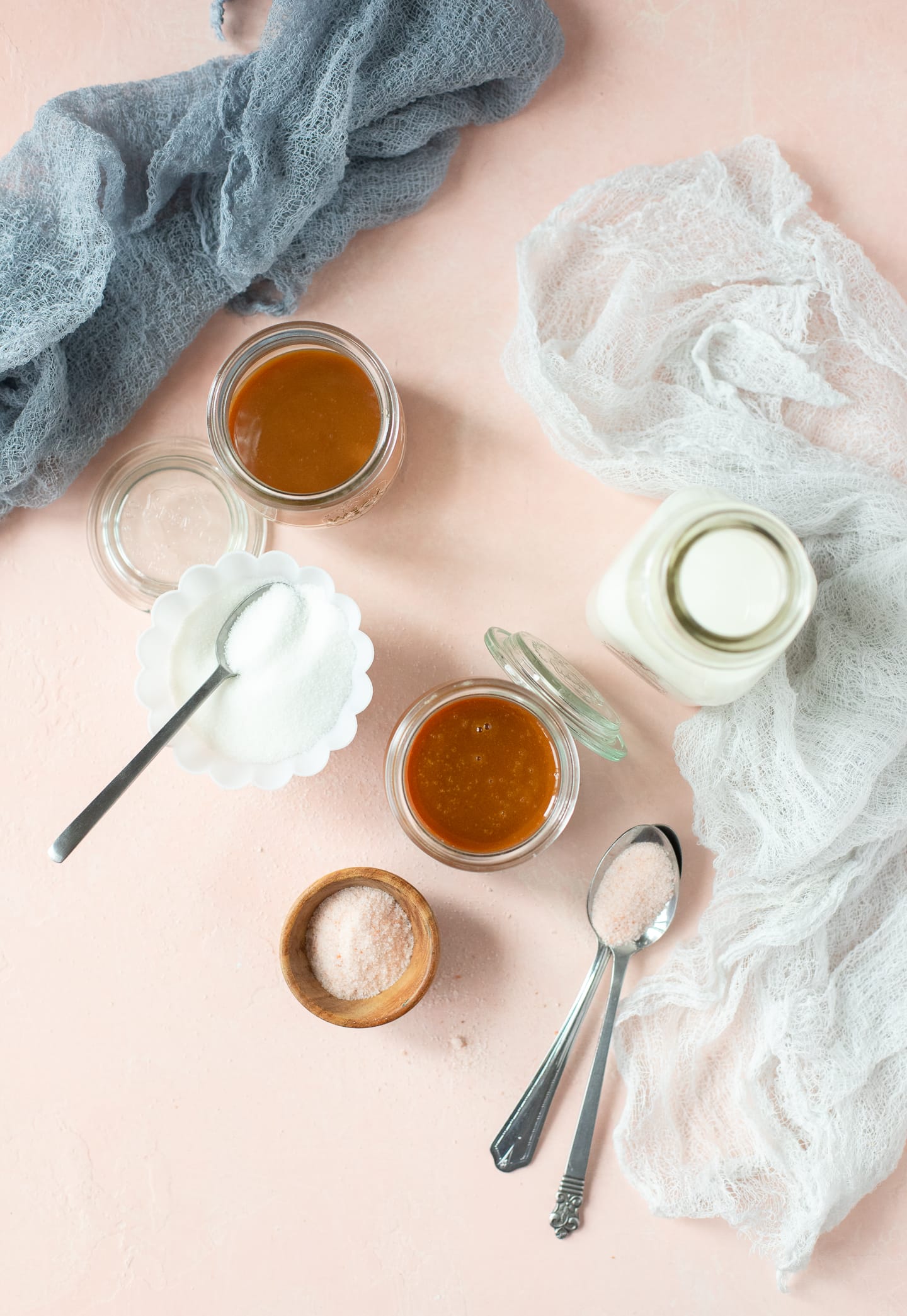
Tips for making caramel sauce
This recipe can be tricky until you get the hang of it. Here are some tips I highly recommend you read before starting:
Start with clean tools. Make sure your pot and spatula are clean and dry. Your sugar should also be completely pure; if it has come into contact with bits of flour, etc., that could effect how well it liquifies. Clean conditions help prevent the sugar from crystallizing.
Use a heavy-bottomed, TALL pot. Trust me on this one! A thin pan will lead to burnt caramel, and a pan that's too shallow can lead to a dangerous mess, since the hot caramel will steam and bubble vigorously when you add milk to it.
Wear an oven mitt. Even with a tall pot, I recommend wearing an oven mitt on the hand that you'll use to stir in the milk. You need to keep the caramel stirring constantly once the milk has been added, but the steam can get so hot that this can become close to impossible with a bare hand.
Don't multi-task. Don't try to make caramel at the same time as you're doing something else. The process moves quickly and is extremely time-sensitive. If you're not paying close attention you'll most likely burn your caramel or cause it to seize or curdle, and nobody wants that!
Don't stir the sugar. I can't stress this enough: while the sugar is heating up and starting to liquify, DO NOT STIR. The only thing you want to use your spatula for at this point is to push the liquid sugar on top of the solid sugar so it doesn't burn. Hold off on any stirring until all of the sugar has liquified.
Don't burn the caramel. I realize this seems obvious, but it also needs to be said. Once the sugar turns to liquid, continue to cook it just until it turns a rusty golden-brown color. Then STOP.
Don't give up! Real talk: your first attempt at making caramel might not be a complete success. BUT, I can tell you from my own experience (and that of so many readers who have commented on this recipe!) that the second attempt is usually much better.
For more helpful pointers, check out my top ten tips for making caramel without cream!
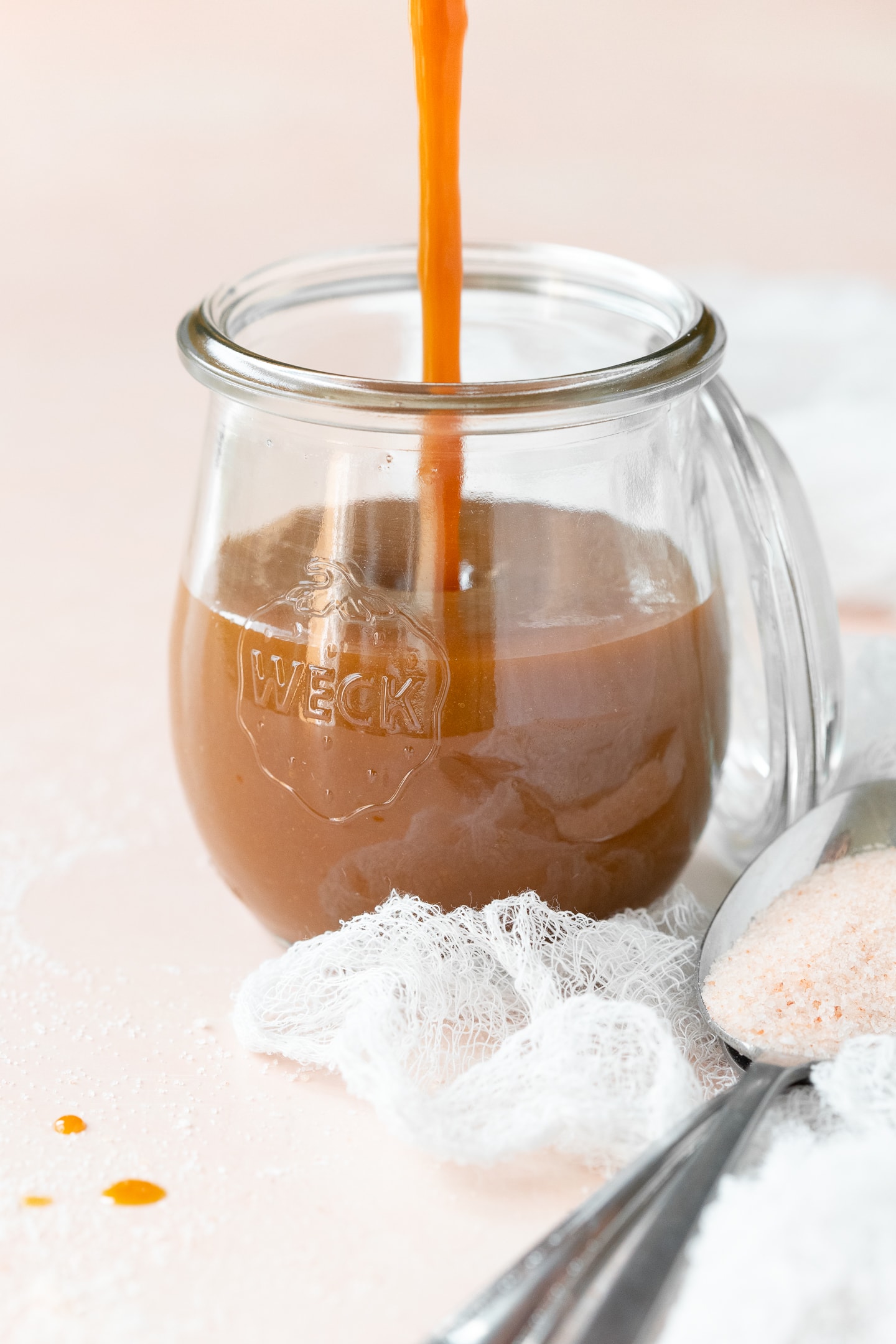
Troubleshooting caramel
There are two main issues you might run into while making this caramel sauce:
The milk curdles: One issue with using milk in a caramel sauce is the possibility of it curdling. This can be caused by a few things: the sugar getting too dark or burnt (and acidic) before adding the milk, using old milk, and/or not stirring the caramel constantly once the milk has been added. In any case, you can usually save a curdled caramel sauce by using an immersion blender to smooth it out again.
The caramel seizes: It is not at all uncommon for your caramel sauce to seize when milk is added to it. When this happens, the liquid caramel hardens into a semi-solid clump and you're left with a pot full of milk and a clump of caramelized sugar. Don't panic! Just put the caramel back on the stove and stir it continuously until the clumps melt back into the sauce. It may take a while but it should eventually happen.
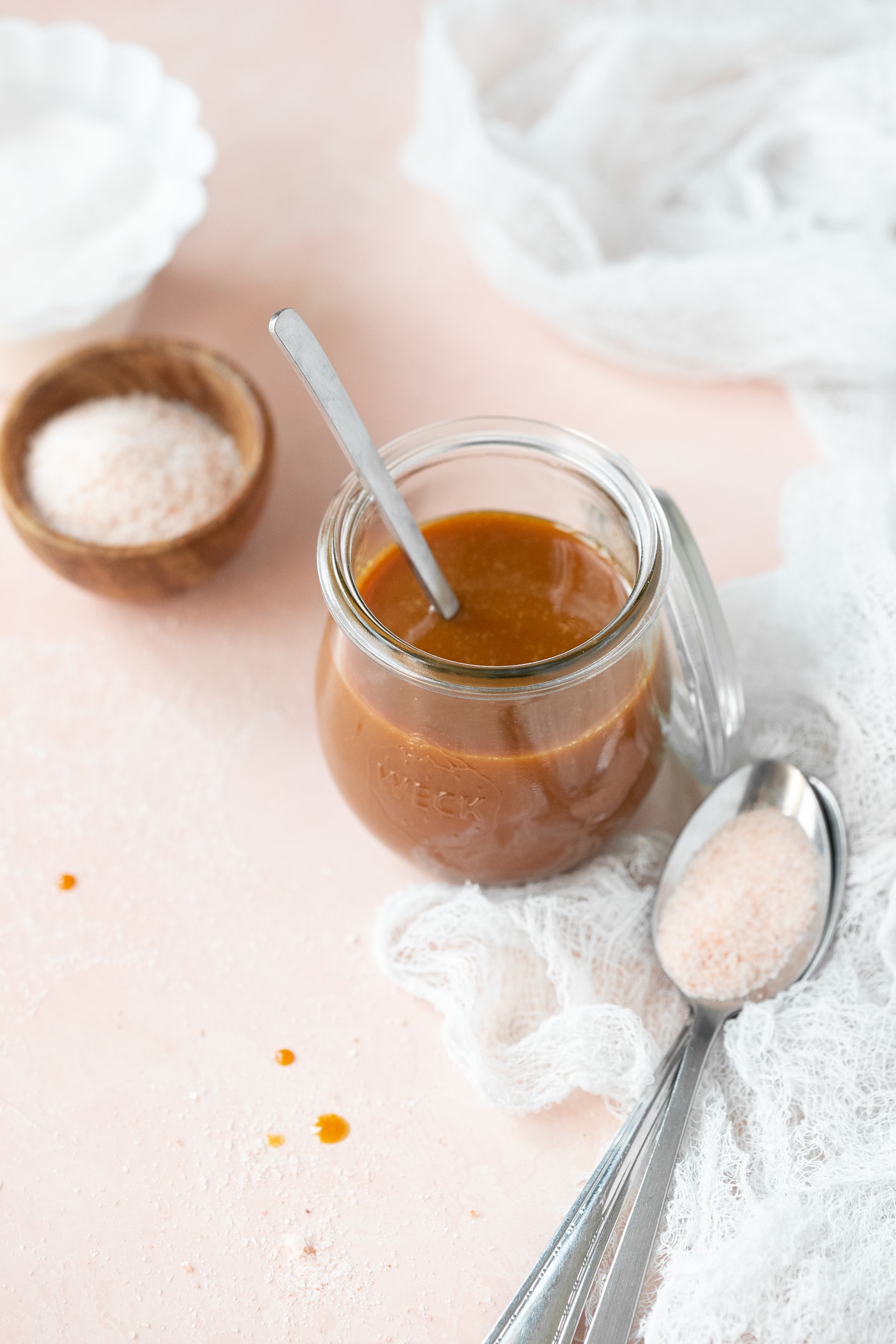
Can I double the recipe?
I would highly recommend that you not double this recipe unless you've made it many times already and are 100% comfortable with the process. Too much sugar in a pot becomes hard to cook evenly, and this can lead to all sorts of difficulties.
Making a thicker sauce
If you don't cook the caramel sauce for more than a couple minutes after adding the milk, it will be thin, which is perfect for mixing into coffee. But if you're looking for a thicker caramel sauce, just cook it longer (about 10-15 minutes after adding the milk) while stirring constantly.
Storing caramel
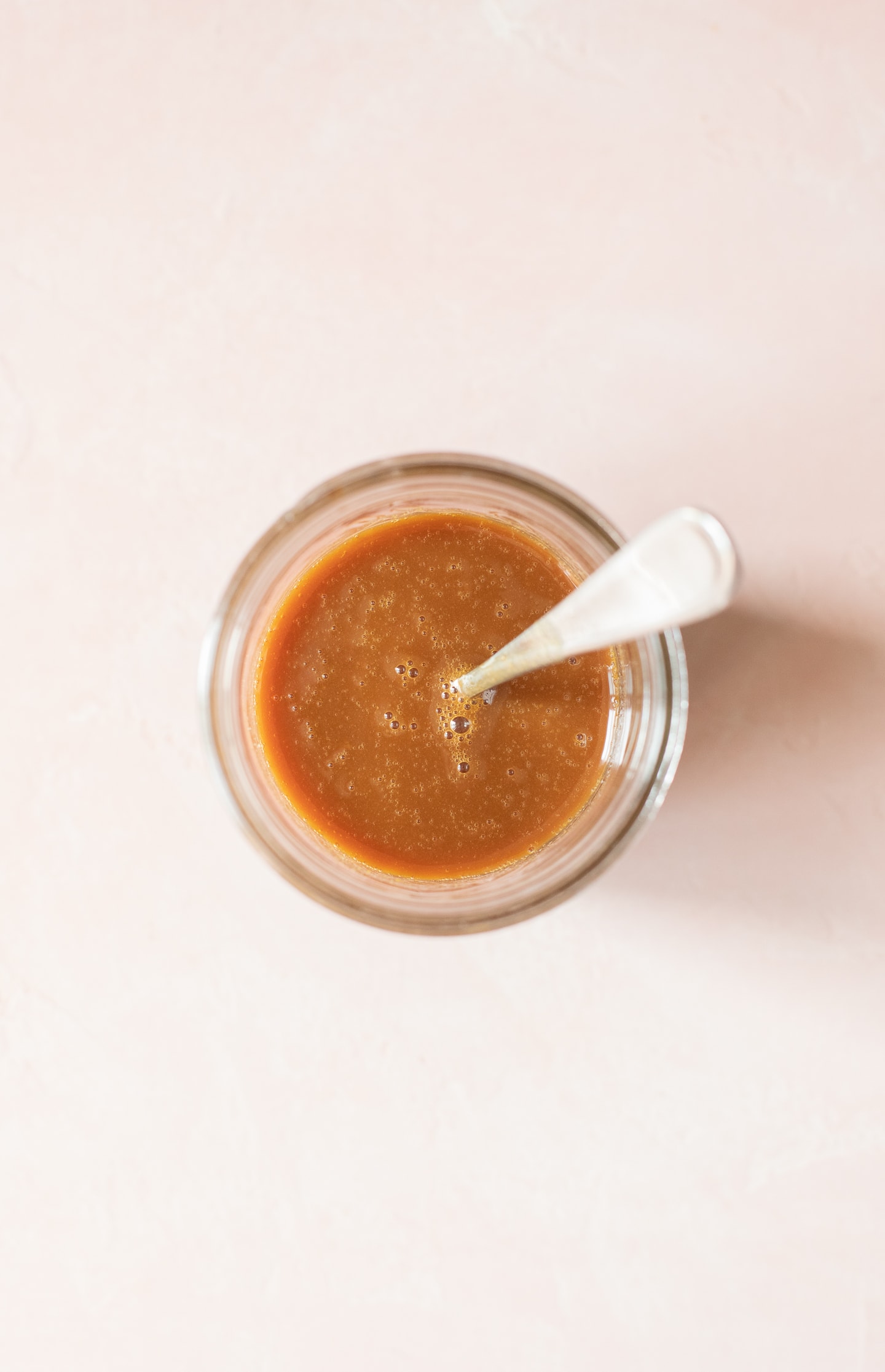
This caramel sauce can be stored in a jar in the refrigerator and should last for several weeks, if not longer. But I have no doubt you'll use it faster than that!
More caramel recipes
Once you've got the hang of making caramel, it's easy to adapt the method to different recipes. Here are some recipes using caramel that you can try:
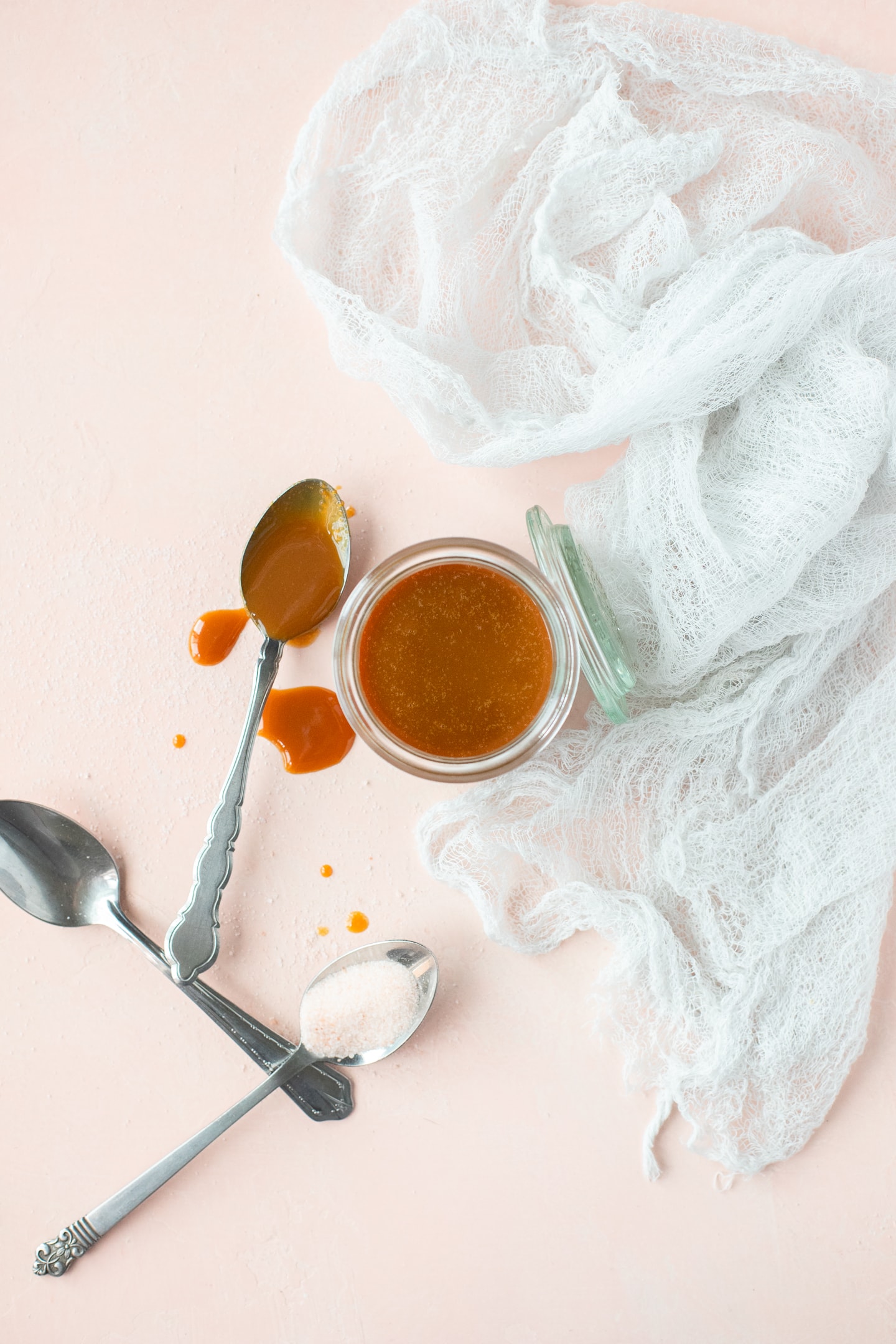
Caramel Latté Ice Cream - A silky, luscious ice cream that tastes like the frozen version of an ultra-creamy caramel latte. Cannot recommend enough.
Salted Caramel and Candied Pecan Biscotti - Classic biscotti gets an exciting twist with the addition of crunchy candied pecans, a heavy caramel drizzle, and a sprinkle of sea salt to top it all off.
Boozy Chocolate Caramel Cups - Mini chocolate cups filled with rum-spiked caramel. It's homemade candy at its finest!
A final tip
Read through the entire recipe below before you start making this caramel sauce! The process moves very quickly and you'll be much more likely to succeed if you know what to expect.
PrintCaramel Sauce with Milk
A simple and delicious caramel sauce made with only sugar, milk, and sea salt. No cream or butter needed!
- Prep Time: 5 minutes
- Cook Time: 20 minutes (up to 30)
- Total Time: 25 minutes (up to 35)
- Yield: 1 to 1-¼ cups caramel sauce*
- Category: candy
- Method: stovetop
- Cuisine: American
- Diet: Low Fat
Ingredients
- 1 cup granulated sugar
- 1 ¼ cups milk**
- ¼ - ½ teaspoon sea salt***
Instructions
- Heat sugar in saucepan: Place the sugar in a large, tall, heavy-bottomed pot, shaking it so that the sugar is in a thin, even layer. Place the pot over medium-low heat. Set a timer for 8 minutes while the sugar starts to heat up. During this time, leave the sugar untouched.
- Continue cooking: Check on the sugar once the 8 minutes are up. If you're starting to smell it, or see areas where it appears light brown or translucent, it's about to start turning liquid. If this happens, skip to step 3 now. Otherwise, set the timer for another 8 minutes, but this time, keep an eye on the sugar. Around 8 minutes later you should see it starting to liquify.
- Warm milk: Meanwhile, prepare for the next few steps, as they will come quickly. Warm the milk in a microwave-safe container for about a minute, and stir to even out the temperature. Place the warm milk near the stove along with a trivet (where you can quickly place the pot of caramel once ready), and a heat-safe spatula.
- Finish melting sugar: As soon as you see the sugar turning liquid, take your heat-safe spatula and carefully start to scoop the liquid sugar over the solid sugar. Continue to do this as more sugar turns liquid; the idea is not to stir the sugar, but just to keep the liquid parts from burning. Once all of the sugar has turned liquid, stir gently until it turns a rusty golden-brown color. This should only take a few seconds; be careful not to let it burn.
- Add milk to sugar: As soon as the caramel turns the appropriate color, remove it from the stove, place it on the trivet, and quickly stir in half of the warm milk. It's important to keep stirring the caramel during this time. The milk will cause the caramel to steam and bubble rapidly, so be careful as you stir. Continue to stir as the bubbling subsides, and then stir in the remaining milk.
- Return to heat: Some (or much) of the caramel may have hardened when the milk was added. If so, or if you want a thicker caramel, return the pot to the stove. Stir constantly over medium-low heat until any hardened caramel has melted back into the mixture. Be sure to carefully pry any hardened bits off of the bottom or sides of the pot as necessary, melting these pieces back in as well. Be patient; it may seem like they aren't going to melt, but with time it should.
- To make a thicker caramel: If you want a thicker caramel, better for drizzling onto baked goods, cook the caramel, stirring constantly, for an additional 10-15 minutes after adding the milk. Be careful not to let it come to a boil. It will not look very thick while it's hot, but as it cools, it will thicken substantially.
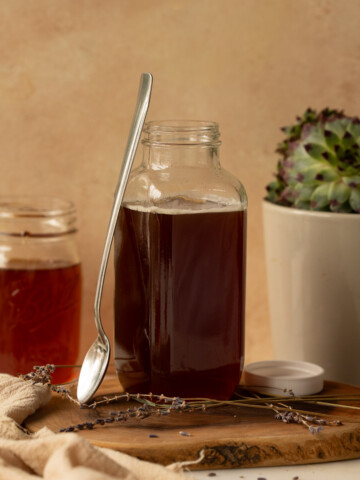
- Add salt and cool: Once all hardened pieces of caramel have melted (as needed) and the caramel has cooked longer (as desired), remove the pot from the heat. Whisk in the sea salt. Pour the caramel into a heat-proof container (if using glass, you can put a metal spoon in it to prevent shattering). Cover and place in the refrigerator to store; it will thicken as it cools.
Notes
*A thinner caramel sauce will yield about 1-¼ cups, while a thicker caramel sauce (cooked longer) will yield about 1 cup.
**I typically use 2% milk or whole milk. Readers have told me that the following will also work: 1%, skim milk, rice milk, goat's milk, almond milk, soy milk, and lactose-free milks such as Lactaid. (I haven't tested these alternatives myself.)
***For more of a "salted caramel", use ½ teaspoon of sea salt. Otherwise, ¼ teaspoon should do it.
Basic Recipe Adapted From: The Perfect Scoop via Annie's Eats


GeorgeTheJournalist
Thanks for the recipe. I did it yesterday and it worked out perfectly, even though I've always lost my battles with caramel before. Thanks!
alexandra
You're welcome! That's fantastic to hear!
Erika Santana
Thanks so much for the recipe and the very thorough explanation! It was very helpful to know what to expect before getting started. It worked like a charm on the very first time.
alexandra
You're welcome! I'm so glad it worked well. :)
Odyakov
Wow! I tried a much wider pot and I heated up the milk almost to boiling point. It came out perfect and everyone loved it!! Thanks for a great recipe!! Happy New Years 2013!!!
alexandra
Perfect! Thanks for letting me know; I love hearing when someone tries a recipe and has success with it. :)
Have a very Happy New Year yourself!
Odyakov
My caramel smells and tastes a little burnt. I used plain white table sugar. Was I supposed to use a different kind of sugar? My temperature was correct. My milk also curdled and I did stir constantly but I guess it was because the milk wasn't hot enough and when it came in contact with something hotter, it curdled. Next time ill try heating up the milk more.
alexandra
Make sure your sugar is pure cane sugar; that's your best bet for caramel. If the caramel seems burnt, you just cooked it a little too long before taking it off the heat and adding the milk. Next time, stop right when it turns a reddish-brown color. It helps to use a light colored pan if possible so you can see the caramel better. This is something you'll be able to gauge better with practice, too. As far as the milk curdling, did you heat it up as much as instructed in the recipe (1 minute)? If so, try adding another 30 seconds. It should be pretty warm by then.
Odyakov
Thanks! I was using a dark colored pot! Ill try a whiter colored pot today!
Drea
I just made this sauce and it came out perfect! Thanks so much for sharing this!
alexandra
Great! I'm so glad you let me know. :) You're welcome.
Felise
Hey! I tried your recipe and mine curdled too. I turned off the stove, added half the milk. I stirred it while it was bubbling furiously (maybe not constantly). After I added in the rest of the milk and the bubbling subsided, I noticed it had curdled. I've made it using cream and didn't have a problem. Do you let the sugar cool for a while before adding the milk? Any other ideas of how to prevent curdling? Thanks!
alexandra
Well, when you add the milk, you pretty much have to stir CONSTANTLY until you're done cooking. What I do is remove the pot from the stove, stir as I add the half the milk, keep stirring for a couple seconds, and then stir as I add the remaining milk. So I don't wait at all really between the two additions. Then I put it back on the stove and literally stir constantly until I feel like it's thickened enough. Otherwise, the heat will quickly make the milk curdle. Does that help?
Felise
I made it this morning with 1/2 cream and 1/2 milk (turned out great). I just saw your reply, so I'll try again using only milk. Thanks for your help!!
alexandra
Fantastic! And you're welcome. :)
Kath
Hi - i made 5 attempts this morning, the first one split, 2nd, 4th adn 5th were perfect but the third one i burnt the sugar and it also split.
Any ides why it would split (looks curdled) the one that i didn't burn still tasted nice but looks terrible!
Also, I used caster sugar (what i had on hand) and it melted within the first 8 minutes.
thanks
alexandra
In the instances when the caramel
curdled, when did it happen? If it happened when you were cooking it after you added the milk, were you stirring constantly? If you weren't, that can cause the curdling. If you give me more information I might be able to help more. :)
Marcie Pomeroy
It looks beautiful! Waiting for it to cool, but planning to have it on ice cream tonight and I did 1 small jar for a friend as a gift! Thank you for the great recipe!
Marcie Pomeroy
So it is just about cooled, looks beautiful, but it is very liquid, what should I do on the next batch to thicken it up a bit?
alexandra
Cook it longer! Usually you can sense the caramel getting thicker as you cook, but the dramatic thickening happens after it cools. It will probably still thicken up though if you just wait longer; you can stick it in the freezer for a short amount of time if you need it to happen quickly, but normally I would stick to the fridge for cooling. But next time, like I said, just cook it longer after adding the milk. As long as you keep stirring it's fine to go as long as needed to get the consistency you want.
And in response to your other comments: you're welcome and I'm really glad it went pretty smoothly for you the first time! It's not always easy to make that happen. ;)
Marcie Pomeroy
Thank you sooo much! 2nd batch I cooked too long before adding milk...yuck, but 3rd batch after I received your message turned out perfect! One of the problems I noticed was that my milk was only 1%, so I did 1 cup instead of 1 1/4 and it worked! Thanks for such a great recipe! I love caramel sooo much anyways and this is delicious
alexandra
Awesome! The lower fat the milk is, the longer it will take to get thick and the harder it will be to make the caramel turn out well (although it sounds like you have it down!). I've made really thick caramel that sets for drizzling on things I've baked, and to do that I use cream and do equal parts sugar and cream. It gets thick quickly and easily, which is why I do it that way sometimes. So you were wise to use a little less milk; I hadn't tried that with milk so now I know it works!
Marcie Pomeroy
Making this right now!! So excited!!
Holly
This looks exactly like what I'm looking for! One question: above you asked a poster if they were using pure cane sugar. Will that make a difference? Because that is what I generally use. Any help is greatly appreciated. Caramel is the sauce of choice for my daughter and me, and I want to get away from the store bought with all the junk in it.
alexandra
Pure cane sugar is exactly what you want. Good luck with your caramel-making endeavors! Let me know if you come up with any more questions, because I'm happy to help. :)
Holly
Never came back to say that this was great! I think I had to put it back on the stove to get thicker, but it was great. I'm making another batch today. I don't think I actually made the first batch until February, but it did last just fine in the fridge. I was sort of rationing it! Thanks again.
alexandra
Thanks for letting me know! I'm so glad you're enjoying the caramel. It does last pretty well... definitely long enough to be consumed, at least!
Zsuzsa
thank you for sharing this great recipe. it saved me from having to run to the store for heavy cream.
alexandra
I'm glad you liked it :)
Lindsey
Hi this recipe looks quite easy to do but will I be able to make it thick enough for a banoffee pie? I have seen that you've wrote it can be quite thick but I'm wondering if its thick enough for banoffee pie
alexandra
I've actually never had banoffee pie, but if cooked long enough after adding the milk, the caramel will achieve a really thick, spoonable consistency. However, it will still be in a liquid state, meaning that it won't set completely (unless, perhaps, you cook longer than I did). If you want it to thicken to the point that it will set, the easiest way to do that is to use heavy cream instead of milk, and use equal parts cream and sugar (1 cup of cream, 1 cup of sugar). Within a few minutes of adding the cream the caramel will be really thick, and it will set quickly as it cools, like a soft caramel chew. You could also try doing this with the milk, but I haven't tested that myself.
Sarah
The first time making this, it came out heavenly! The second time, my milk curdled the second it hit the caramel (I was using 1% this time. Was that the problem?). The third time, it was perfect, until it cooled completely in the fridge and completely crystallized. What am I doing wrong?! I have a culinary degree, and yet I can't seem to master this!
alexandra
When you say the milk curdled, you're saying that it wasn't a problem of the caramel seizing, is that correct? I'm really not sure why that would happen. I have experienced the caramel seizing when the milk hits it, but as I explained in the recipe, that's resolved by continuing to cook the caramel, continuously stirring, until the sugar melts again. I've never had the milk curdle, though. Did you remember to warm the milk before adding it to the caramel?
I've also never experienced the caramel crystallizing once it's cooled. That's really strange to me. The only thing I can come up with is that you may not have have had all of the sugar completely melted in the first place, so once the caramel cooled, it started to recrystallize. Make sure when you're melting the sugar you "stir" it as little as possible before adding the milk so that it melts smoothly. Were you using pure cane sugar? Also, I know that a bit of cream of tartar, corn syrup, or lemon juice can help prevent caramel from crystallizing, but I've never used it when making this recipe.
Making caramel with milk versus cream is more temperamental, but I like doing it this way to skip the added calories of the cream. I hope you don't give up on it; because I know it works!
Let me know if I can help in any other way. :)
Melissa
Hello- making caramel to drizzle over yummy Thanksgiving pies! Question: I'm making one batch at a time ... But can I store in same container and put in fridge?
alexandra
Sounds amazing! You can definitely do that. I would encourage you to try the recipe out before crunch-time comes just so that you get the hang of it if you haven't made it before. It's one of those things that you get better with after practice! Also, I don't know how thick you want the caramel to be, but like I mentioned in the recipe, the longer you cook the caramel after adding the milk, the thicker it will get (just make sure you keep stirring). Cream will also make the caramel thicker faster, if you don't necessarily feel obligated to use milk. You can always go half cream, half milk too.
Melissa
Thanks for your reply! Three batches ... done! It tastes fantastic but unfortunately thinner than I'd hoped. I stirred an extra 15 minutes as well. My question is: can I heat up and add thicker milk or cream at this point, or would that ruin it?
alexandra
I think you could put it back on the stove, medium-low heat again, and just continue to cook and stir until it thickens more. Another option would be to make one really thick batch and then add the other batches in once cooked. You can make a really thick batch with 1 cup of sugar and 1 cup of heavy cream. Let me know if you have any other questions! I'm happy to help.
:(
Tried this and it went so wrong as soon as it come to the milh the caramel went into a hard blob :(
alexandra
Well I'm sorry that you were having trouble with this, but as I explained in the recipe, the caramel might turn into a big blob just as you described, and the problem can be fixed. You simply need to return it to the stove on medium-low heat with all of the milk in the pot and stir constantly until the blob melts. If you look back at the recipe you should see the detailed instructions on this. Hope you give it another go!