

Learn how to make a simple and delicious caramel sauce made with only sugar, milk, and sea salt. No cream or butter needed!
Quick Note: This is an updated version of a post that originally appeared on Bright-Eyed Baker in 2012. Updates include new text and photos, as well as some details added to the instructions for clarity.

Jump to:
Back in the day, when consuming copious amounts of sugar at once didn't seem like an awful idea, my coffee drink of choice was a caramel frappucino. I later moved to a skinny caramel frap, and then to caramel macchiatos, but my love of all things coffee + caramel persisted. It's for that reason and that reason only that I developed this recipe for making caramel sauce with milk.
I tried multiple other recipes - some using a dry method, some a wet method; some with heavy cream, and some with butter. But here's the thing: they were all problematic for one reason or another. One burned. Another was so thick you definitely couldn't pour it into a latté. And every recipe using cream or butter along with the requisite sugar just seemed a little too heavy for an every-morning drink.
So here we are now, after *many* failed batches, with a very simple caramel sauce made without any cream or butter. Making caramel sauce with milk is extremely unconventional, and there's a reason for that: milk has a lot less fat than heavy cream, which makes the process trickier. But it can work, it's still delicious, and after a little practice it's really not difficult at all.
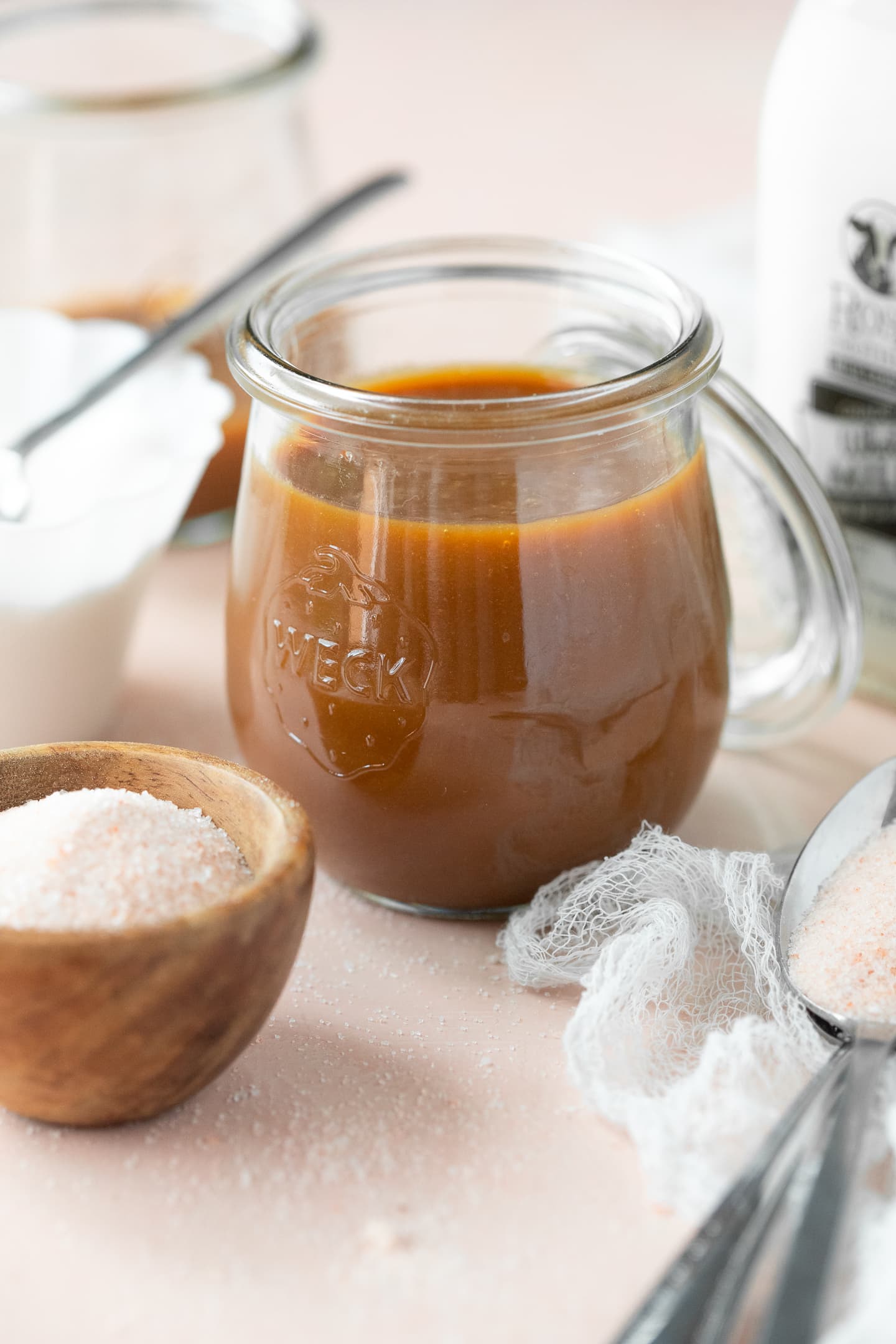
What is dry-method caramel?
Like I mentioned before, there are two basic methods for making caramel: a wet method and a dry method. The wet method involves mixing sugar with water before cooking it; as the sugar melts, the water evaporates. With the dry method, the sugar is heated by itself until it starts to caramelize and turn liquid. Some people find the dry method more difficult, but I personally prefer it.
Ingredients
There are only three simple ingredients you need for this recipe: sugar, milk, and sea salt. I've personally tested this recipe with 2% and whole milk, but readers have shared in the comments that they've used all sorts of other milk. See the recipe notes for other types of milk that I've been told work.
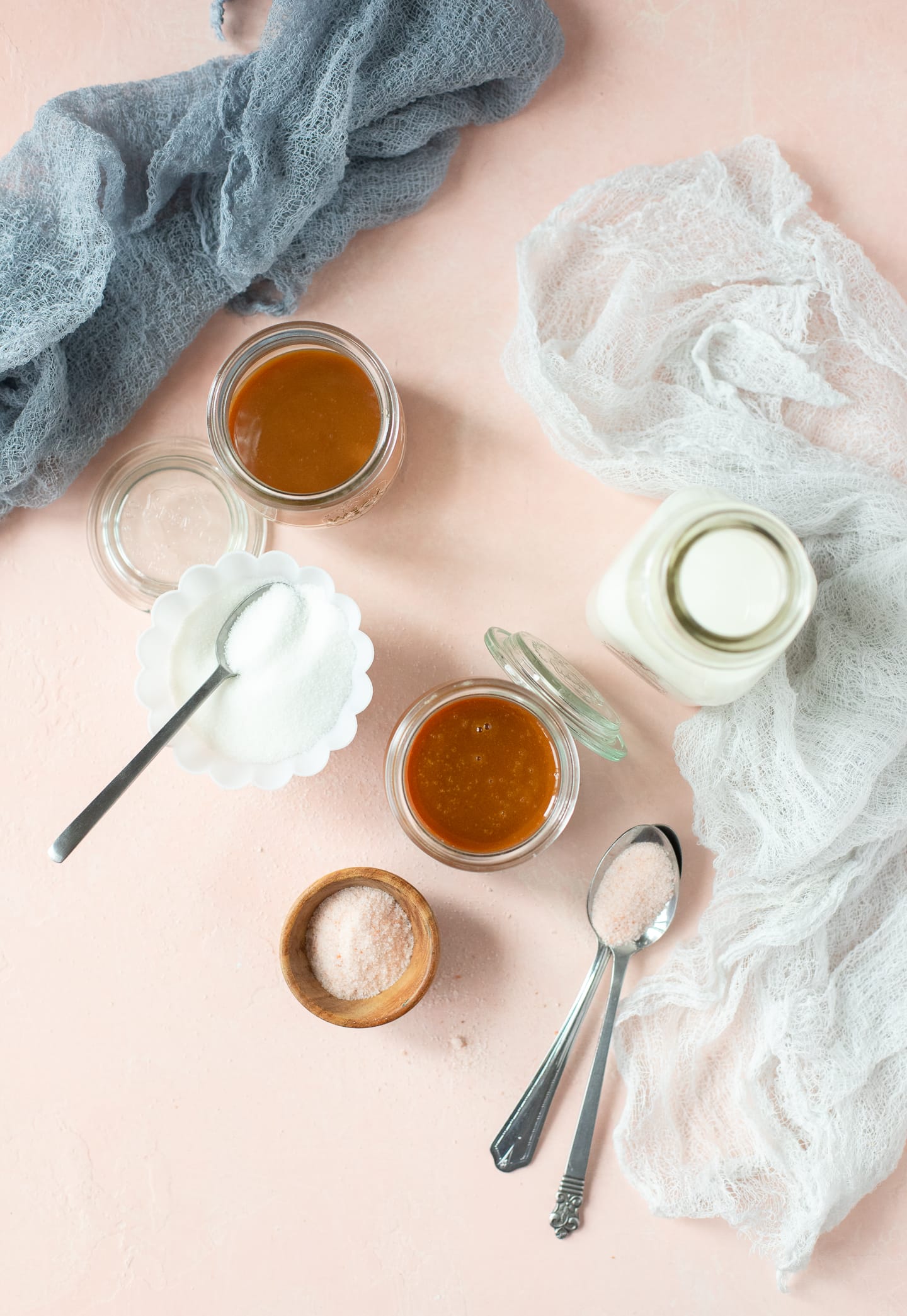
Tips for making caramel sauce
This recipe can be tricky until you get the hang of it. Here are some tips I highly recommend you read before starting:
Start with clean tools. Make sure your pot and spatula are clean and dry. Your sugar should also be completely pure; if it has come into contact with bits of flour, etc., that could effect how well it liquifies. Clean conditions help prevent the sugar from crystallizing.
Use a heavy-bottomed, TALL pot. Trust me on this one! A thin pan will lead to burnt caramel, and a pan that's too shallow can lead to a dangerous mess, since the hot caramel will steam and bubble vigorously when you add milk to it.
Wear an oven mitt. Even with a tall pot, I recommend wearing an oven mitt on the hand that you'll use to stir in the milk. You need to keep the caramel stirring constantly once the milk has been added, but the steam can get so hot that this can become close to impossible with a bare hand.
Don't multi-task. Don't try to make caramel at the same time as you're doing something else. The process moves quickly and is extremely time-sensitive. If you're not paying close attention you'll most likely burn your caramel or cause it to seize or curdle, and nobody wants that!
Don't stir the sugar. I can't stress this enough: while the sugar is heating up and starting to liquify, DO NOT STIR. The only thing you want to use your spatula for at this point is to push the liquid sugar on top of the solid sugar so it doesn't burn. Hold off on any stirring until all of the sugar has liquified.
Don't burn the caramel. I realize this seems obvious, but it also needs to be said. Once the sugar turns to liquid, continue to cook it just until it turns a rusty golden-brown color. Then STOP.
Don't give up! Real talk: your first attempt at making caramel might not be a complete success. BUT, I can tell you from my own experience (and that of so many readers who have commented on this recipe!) that the second attempt is usually much better.
For more helpful pointers, check out my top ten tips for making caramel without cream!
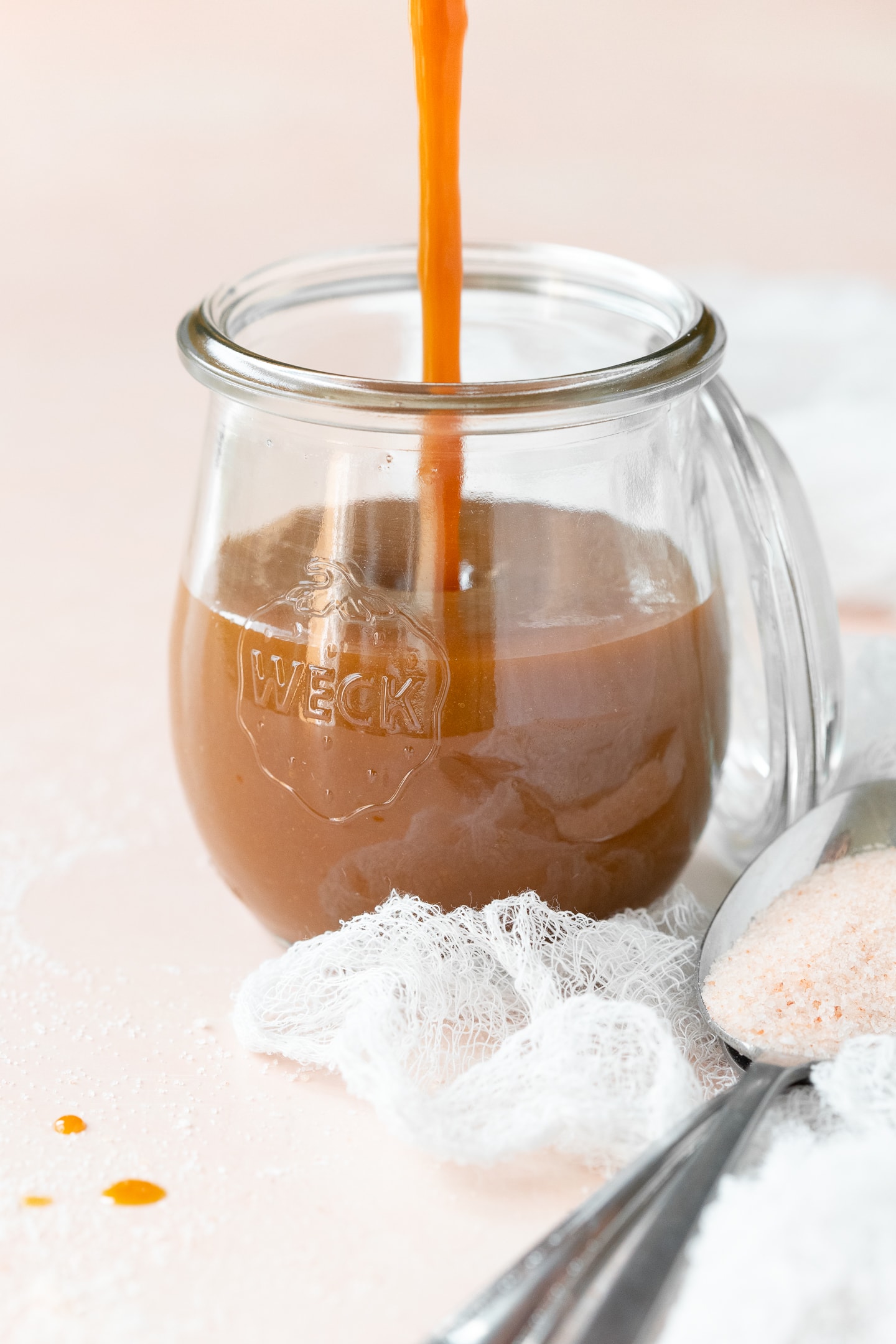
Troubleshooting caramel
There are two main issues you might run into while making this caramel sauce:
The milk curdles: One issue with using milk in a caramel sauce is the possibility of it curdling. This can be caused by a few things: the sugar getting too dark or burnt (and acidic) before adding the milk, using old milk, and/or not stirring the caramel constantly once the milk has been added. In any case, you can usually save a curdled caramel sauce by using an immersion blender to smooth it out again.
The caramel seizes: It is not at all uncommon for your caramel sauce to seize when milk is added to it. When this happens, the liquid caramel hardens into a semi-solid clump and you're left with a pot full of milk and a clump of caramelized sugar. Don't panic! Just put the caramel back on the stove and stir it continuously until the clumps melt back into the sauce. It may take a while but it should eventually happen.
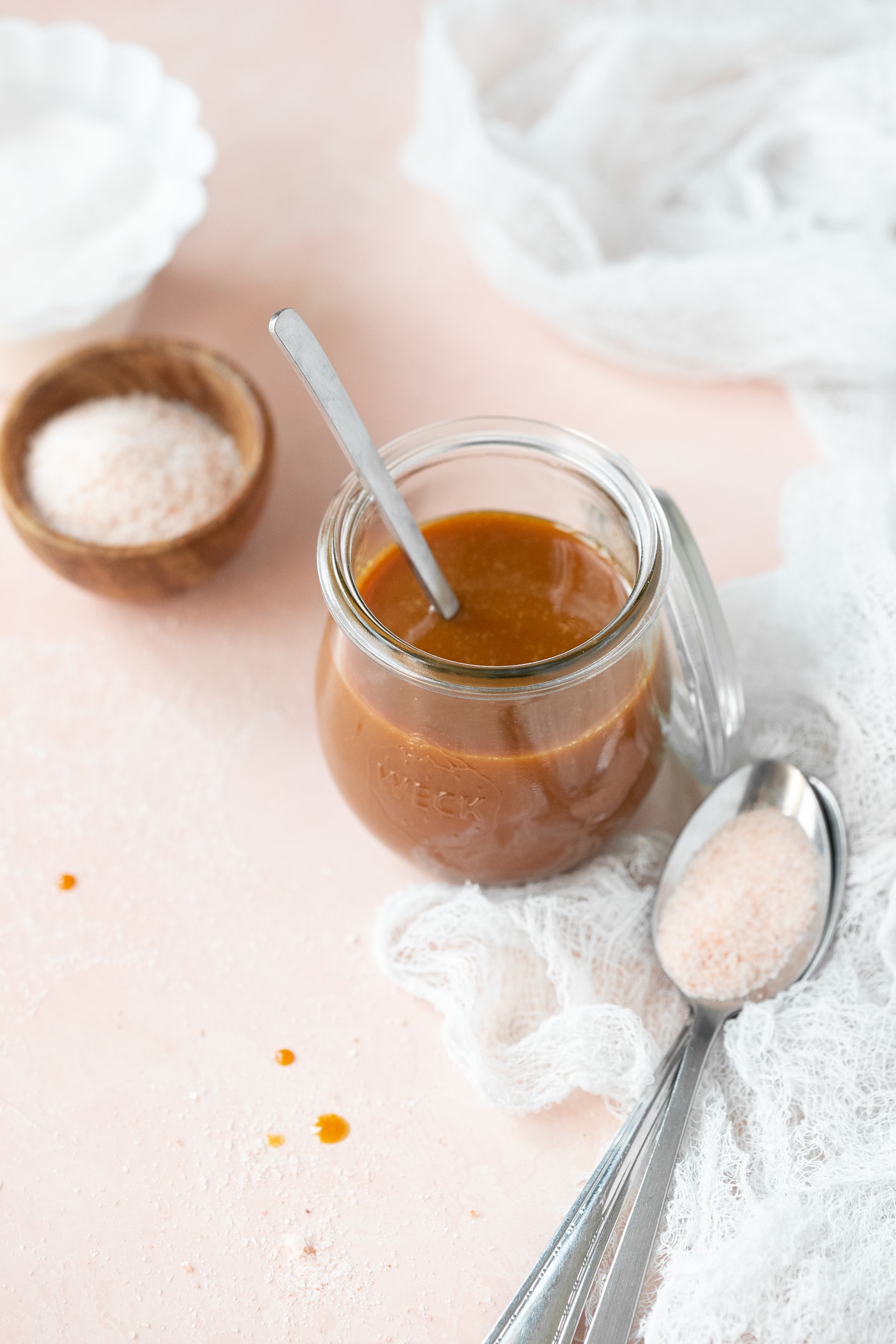
Can I double the recipe?
I would highly recommend that you not double this recipe unless you've made it many times already and are 100% comfortable with the process. Too much sugar in a pot becomes hard to cook evenly, and this can lead to all sorts of difficulties.
Making a thicker sauce
If you don't cook the caramel sauce for more than a couple minutes after adding the milk, it will be thin, which is perfect for mixing into coffee. But if you're looking for a thicker caramel sauce, just cook it longer (about 10-15 minutes after adding the milk) while stirring constantly.
Storing caramel
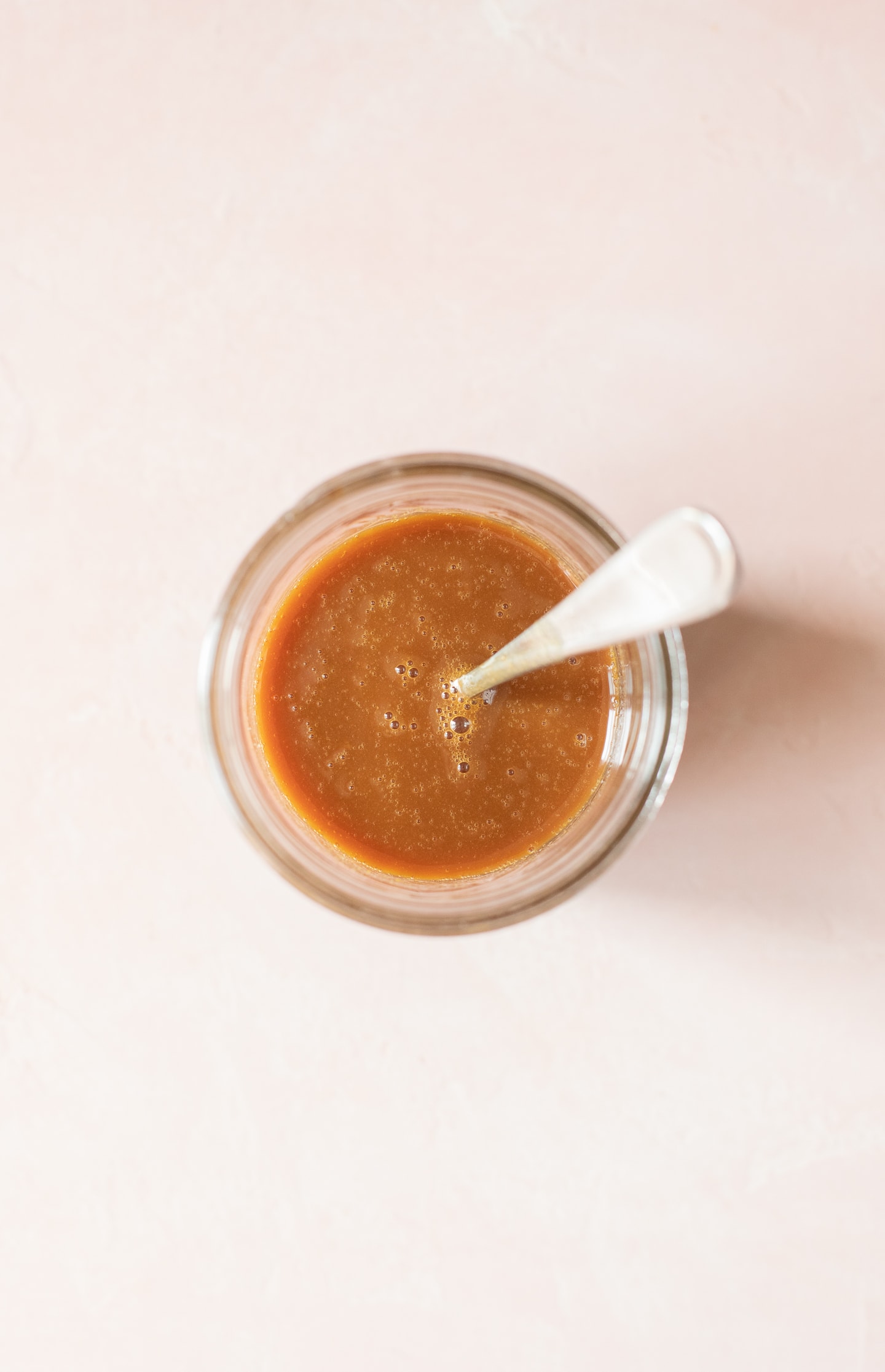
This caramel sauce can be stored in a jar in the refrigerator and should last for several weeks, if not longer. But I have no doubt you'll use it faster than that!
More caramel recipes
Once you've got the hang of making caramel, it's easy to adapt the method to different recipes. Here are some recipes using caramel that you can try:
Caramel Latté Ice Cream - A silky, luscious ice cream that tastes like the frozen version of an ultra-creamy caramel latte. Cannot recommend enough.
Salted Caramel and Candied Pecan Biscotti - Classic biscotti gets an exciting twist with the addition of crunchy candied pecans, a heavy caramel drizzle, and a sprinkle of sea salt to top it all off.
Boozy Chocolate Caramel Cups - Mini chocolate cups filled with rum-spiked caramel. It's homemade candy at its finest!
A final tip
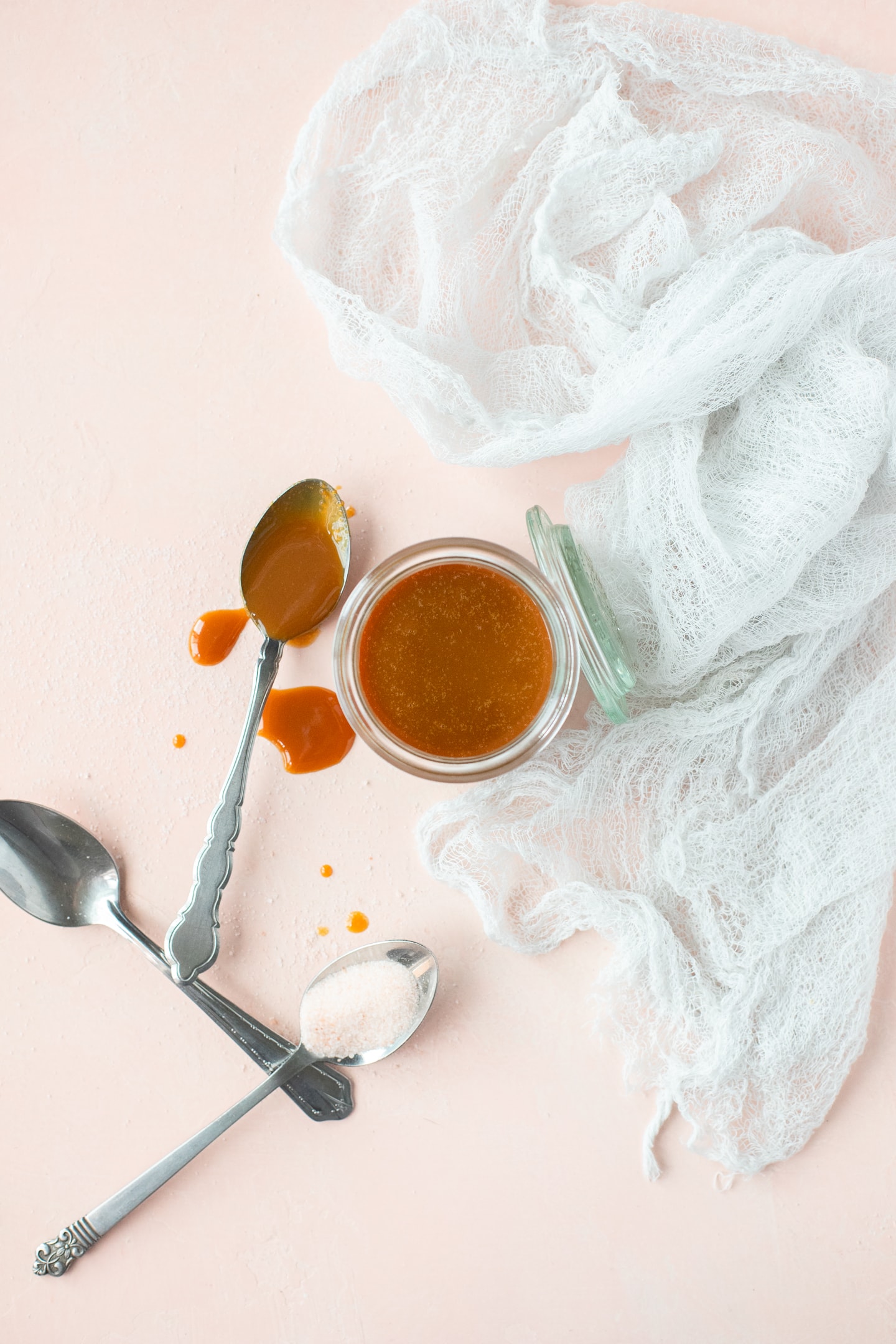
Read through the entire recipe below before you start making this caramel sauce! The process moves very quickly and you'll be much more likely to succeed if you know what to expect.
PrintCaramel Sauce with Milk
A simple and delicious caramel sauce made with only sugar, milk, and sea salt. No cream or butter needed!
- Prep Time: 5 minutes
- Cook Time: 20 minutes (up to 30)
- Total Time: 25 minutes (up to 35)
- Yield: 1 to 1-¼ cups caramel sauce*
- Category: candy
- Method: stovetop
- Cuisine: American
- Diet: Low Fat
Ingredients
- 1 cup granulated sugar
- 1 ¼ cups milk**
- ¼ - ½ teaspoon sea salt***
Instructions
- Heat sugar in saucepan: Place the sugar in a large, tall, heavy-bottomed pot, shaking it so that the sugar is in a thin, even layer. Place the pot over medium-low heat. Set a timer for 8 minutes while the sugar starts to heat up. During this time, leave the sugar untouched.
- Continue cooking: Check on the sugar once the 8 minutes are up. If you're starting to smell it, or see areas where it appears light brown or translucent, it's about to start turning liquid. If this happens, skip to step 3 now. Otherwise, set the timer for another 8 minutes, but this time, keep an eye on the sugar. Around 8 minutes later you should see it starting to liquify.
- Warm milk: Meanwhile, prepare for the next few steps, as they will come quickly. Warm the milk in a microwave-safe container for about a minute, and stir to even out the temperature. Place the warm milk near the stove along with a trivet (where you can quickly place the pot of caramel once ready), and a heat-safe spatula.
- Finish melting sugar: As soon as you see the sugar turning liquid, take your heat-safe spatula and carefully start to scoop the liquid sugar over the solid sugar. Continue to do this as more sugar turns liquid; the idea is not to stir the sugar, but just to keep the liquid parts from burning. Once all of the sugar has turned liquid, stir gently until it turns a rusty golden-brown color. This should only take a few seconds; be careful not to let it burn.
- Add milk to sugar: As soon as the caramel turns the appropriate color, remove it from the stove, place it on the trivet, and quickly stir in half of the warm milk. It's important to keep stirring the caramel during this time. The milk will cause the caramel to steam and bubble rapidly, so be careful as you stir. Continue to stir as the bubbling subsides, and then stir in the remaining milk.
- Return to heat: Some (or much) of the caramel may have hardened when the milk was added. If so, or if you want a thicker caramel, return the pot to the stove. Stir constantly over medium-low heat until any hardened caramel has melted back into the mixture. Be sure to carefully pry any hardened bits off of the bottom or sides of the pot as necessary, melting these pieces back in as well. Be patient; it may seem like they aren't going to melt, but with time it should.
- To make a thicker caramel: If you want a thicker caramel, better for drizzling onto baked goods, cook the caramel, stirring constantly, for an additional 10-15 minutes after adding the milk. Be careful not to let it come to a boil. It will not look very thick while it's hot, but as it cools, it will thicken substantially.
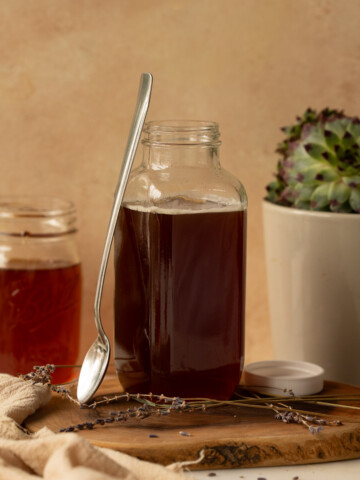
- Add salt and cool: Once all hardened pieces of caramel have melted (as needed) and the caramel has cooked longer (as desired), remove the pot from the heat. Whisk in the sea salt. Pour the caramel into a heat-proof container (if using glass, you can put a metal spoon in it to prevent shattering). Cover and place in the refrigerator to store; it will thicken as it cools.
Notes
*A thinner caramel sauce will yield about 1-¼ cups, while a thicker caramel sauce (cooked longer) will yield about 1 cup.
**I typically use 2% milk or whole milk. Readers have told me that the following will also work: 1%, skim milk, rice milk, goat's milk, almond milk, soy milk, and lactose-free milks such as Lactaid. (I haven't tested these alternatives myself.)
***For more of a "salted caramel", use ½ teaspoon of sea salt. Otherwise, ¼ teaspoon should do it.
Basic Recipe Adapted From: The Perfect Scoop via Annie's Eats


Fei margareth
I've just tried it. This is my first time and it tastes so damn good. Thanks for the recipe! But i wonder why my caramel's consistency is just like milk. Will keep it cool down helps to thicken the sauce?? Thanks.
alexandra
With the ratio of milk to sugar here, you'll end up with a very thin (milk-consistency) caramel. Things you can do to change this include: reducing the amount of milk, cooking the caramel longer after adding the milk, or swapping the milk with cream.
kember turner
Could you use this as a filler for a cake? Also could u double this?
alexandra
If I were going to use it as a filler I'd use cream instead of milk. The caramel will be much thicker and will set better. With cream, you could probably double the recipe without any issues. With milk, it's finicky and best if you stick to a single batch at a time.
sarossa
...hi, love your recipe, it's such a great miracle when it goes from a lumpy mess to an irresistible heaven of a sauce...but this time it came out quite grainy, i even passed it through a mesh with little improvement...why could it be? any idea?
alexandra
It could be that your milk seized. If you go back and read some comments from people who have had the same problem, I've explained a couple reasons why this could happen. If you've made it before without a problem, more than likely, you'll be fine next time! If it does happen again, using an immersion blender should smooth it out :)
Laura Valencia
(Sorry for my bad english im from Colombia) Hey Alexandra i totally loved the recipie i have a very bad patience and i achieve it a the first try, thank you so much :) Greetings for Colombia <3
alexandra
Awesome!
Jackie
So, I just tried this, and admittedly it made some yummy, if not dark, caramel. My question is why does it kinda look like coffee grounds? Nothing taste burnt, but the brown flecking is a little strange
alexandra
I've never experienced brown flecks in the caramel, so I'm not sure where that would be coming from. I'd suggest making another batch - it might just be a one time fluke that you'll correct in your second attempt.
Grace
Can you use table salt instead of sea salt?
alexandra
You could, although I'd probably stick to 1/4 teaspoon if you use table salt.
Autumn
I made caramel today with milk and sugar, and it was the first time I didn't burn it. There were a couple of things that went funny. The sugar melted within 8 minutes, and it started smoking right when my timer went off. Then, I steamed the milk, but it still wasn't hot enough. I thought that steaming the milk super hot would prevent it from curdling but it DID separate. It was ok when I poured it in. The sugar hardened and I had to put it back on the stove and it wasn't melting so I turned the heat to medium. That is when the mixture was at a rolling boil and I saw the thickened caramel on the sides. I thought "cool, the heat is doing it for me! Science!" I thought I saw granules of sugar that hadn't dissolved, but then I realized that milk curdles at a boil. So, the texture is a little funky but it's not bad enough to bother me. It's kind of melt-in-your mouth.
The first time I ever made caramel, I was working in a restaurant and the person who usually did it had quit, so it was up to me. I crossed my fingers and let it smoke a little too long because it wasn't brown yet. Within 5 seconds after adding butter it was hard. I filled the pan with water and let it sit in the sink. I tried again. This time, the heat was higher, and the caramel turned black within a minute and caught on fire. Burning my hands on the handle, I raced down the stairs outside while dumping baking soda in the pan and threw it in an old metal trash can that was sitting in the dark under the stairs. I think I burned my nose hairs with the acrid smell of burnt sugar. To this day, the restaurant is closed and no one found that pan. The only evidence was the thick layer of smoke in the kitchen. Whew!
Anyway, I will be using this caramel for lattes and ice cream. I waited for it to cool down and poured it in the empty squeeze bottle that I had from store bought caramel.
I think I will also use this recipe for making the caramel sauce for flan because every other recipe leads to really crappy hardened or watery caramel. Good flan deserves good caramel and this stuff is perfect!
alexandra
Like you mentioned, you don't want to boil this caramel. You can do so with a cream-based caramel, but not a milk-based one like this. You just have to be patient and keep stirring over heat without boiling.
If you do end up with a bit of a texture problem like you said, you can always stick an immersion blender in after taking it off the heat and it should smooth right out.
Carly
This is so many things.
Incredibly delicious.
Exactly what I was looking for to add to my latte.
So simple to follow for a first timer.
Thank you, thank you!!
Also, how long do you think this will keep in the fridge? (Not that it really matters as I'll be lucky to use this sparingly enough to get through the week ;))
alexandra
I'm so glad you liked it! I would say at least 3 weeks is probably the longest I've kept mine in the fridge, but honestly, it would probably last a month even.
Stephanie
This is the best find of 2016!!! First time was a success which makes it even better. I like to drink straight shots of coffee over ice with a little caramel to take off the bitterness and a splash of cream. Sooooo sooooooo sooooooo good! I used whole milk because that's what I had on hand. But next time I'm going to use half and half instead. That way I'll just pour the shots of coffee with a little of the caramel over ice, no cream necessary then! Thanks for the awesome recipe!
alexandra
Ooh sounds so good! You're welcome! :)
Charlene
I'm so excited to try this!
I'm lactose intolerant and had made one previous attempt to do a wet caramel sauce recipe with almond milk. It worked fine only to realize I didn't like the flavor (and I see you've experienced the same thing with your recipe and almond milk).
I don't mind the flavor of cashew or coconut milk, so I plan on trying this recipe with each of those. I'm also going to give goat milk a try since I have some on hand. Oh and sweetened condensed coconut milk. I'll report back with my experiments.
alexandra
Would love to hear how it went!
Lori
I just tried this recipe and it turned out really weird. This is my first time making caramel and I followed all the steps, but I got a liquid with a bunch of little lumps throughout that won't go away even after I passed it through a siv. What did I do wrong? PLEASE HELP!!
Also, is the sauce supposed to thicken as it cools??
alexandra
It sounds like your milk curdled. This can happen for a few reasons which I've explained in previous comments. It's often a fluke and you'll likely have better luck next time, but when it does happen, an immersion blender can easily fix the problem.
The caramel will thicken slightly as it cools, but not as much as it would with cream.
Cam
It turned out wayyy too liquid. How would I make it thicker?
alexandra
You can reduce the milk, cook it longer, and/or use half-n-half/cream instead of some or all of the milk.
Rebekah
This was insanely easy, perfect first time
Most of it got in the fridge but I couldn't resist a spoonful...
I was quite light on the salt as I'm using it to top brownies and like sprinkling the salt on top for added crunch! Thank you
Kristy
hmm. The caramel melted fine (sugar), but when I added the warm milk the milk split
:( so now it's just a curdled mess. Oh well, thanks for the recipe anyway.
alexandra
The curdling happens occasionally... if you read some of the reviews you'll see that I've explained possible reasons for this. Usually if it does curdle it can be saved with an immersion blender or the like.
Sahar
Thank you so much for taking the time to write such a detailed post. This was my first time making caramel sauce and it turned out amazing! I cooked it long enough to be able to pour over an apple and bread pudding I made. Everyone loved it!!