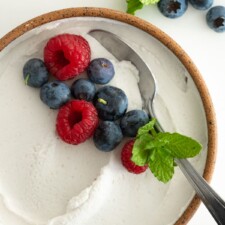
Dairy-Free Whipped Cream
If you feel like your non-dairy desserts are lacking a little something, take them to the next level with a whipped topping! This is the BEST dairy-free whipped cream recipe; it's sweet, silky, and fluffy, with a flavor that's almost indiscernible from traditional whipped cream.
Ingredients
- 14 ounces full-fat coconut milk chilled 12+ hours
- ¼ cup confectioners' sugar sifted
- ¼ teaspoon pure vanilla extract
- 1 pinch of salt
Instructions
- Open chilled can of coconut milk. Scoop out the thick coconut cream, reserving the liquid for later use.14 ounces full-fat coconut milk
- In the bowl of a stand mixer fitted with the whisk attachment, or using a bowl and handheld electric mixer, whip coconut cream on medium-high speed until smooth and creamy. Add powdered sugar, vanilla extract, and salt, continuing to beat just until add-ins are incorporated and whipped cream is thick, smooth, and fluffy. If the mixture is thicker or stiffer than you’d prefer, add the reserved liquid ½ teaspoon at a time, whipping until it reaches your desired texture.¼ cup confectioners' sugar |¼ teaspoon pure vanilla extract |1 pinch of salt
Notes
Choosing the right brand of coconut milk:
- Look for unsweetened, full-fat coconut milk (or coconut cream) with coconut as the first ingredient. Brands that typically work well for this recipe include Arroy-D, Thai Kitchen, and Native Forest. A word of caution: many people do not have success with Trader Joe's coconut milk.
Storing dairy-free whipped cream:
- Store in an airtight container in the refrigerator for up to 2 weeks. If the whipped cream is too stiff to use after chilling, whip it again to loosen it up, adding a small amount of reserved coconut milk "water" if needed.
Recipe variations:
- Chocolate Whipped Cream: Add 1 ½ tablespoons natural cocoa powder. Use 4 ½ tablespoons of confectioner's sugar, ½ teaspoon of vanilla extract, and an extra pinch of salt.
- Naturally-Sweetened Whipped Cream: Substitute confectioner's sugar with 2 tablespoons of maple syrup. Honey also works but will have a more pronounced flavor, and is not vegan.
- Sugar-Free Whipped Cream: Substitute confectioners' sugar with a powdered sugar alternative such as erythritol or monk fruit.
Nutrition
Calories: 45kcal | Carbohydrates: 2g | Protein: 0.4g | Fat: 4g | Saturated Fat: 4g | Polyunsaturated Fat: 0.05g | Monounsaturated Fat: 0.2g | Sodium: 5mg | Potassium: 44mg | Sugar: 1g | Vitamin C: 0.2mg | Calcium: 4mg | Iron: 1mg
Nutrition information is an estimate per serving, calculated using standard ingredients. Actual values may vary based on brands used, measurement methods, and more.
 Did you make this recipe?I’d love to hear from you - leave a rating and review!